


Editorial
(University Brief)

Brand & Campaign Design
Anti-Ageism Awareness
Culture of Change—Bachelor of Communication Design, Torrens University
Identify a social issue and develop a full brand and campaign response—from initial research through to environmental, print and digital applications. I chose ageism, not an accident. As a mature-age student returning to design practice, I had a personal stake in the subject—and I knew the research would be honest.
The Brief—Ageism is one of the most pervasive and least-discussed forms of discrimination in Australian workplaces and public life.
The campaign—developed for a fictional educational seminar series—was designed to raise awareness among working-age Australians aged 35–60: people old enough to have experienced ageist attitudes, young enough to still change them.
The Process—It began with research: reviewing data on age discrimination in Australian employment, analysing existing campaigns, and identifying a target audience whose values and visual language I could speak to directly.


Brand Identity
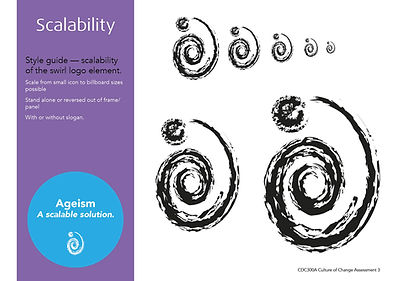
From the research, I developed a brand system built around clarity and quiet confidence—the visual tone I wanted the campaign to project. The identity includes a logo, a considered colour palette, and a repeating pattern system that could flex across environments from print collateral to physical seminar venues.
The brand was designed to feel authoritative without being institutional—approachable enough to engage people who might be defensive about the topic, credible enough to be taken seriously.



Campaign Rollout
With the brand established, the campaign extended across traditional and digital channels: billboard and bus stop poster advertising, social media teasers, and a fully branded seminar venue.
The key visual—a barista, generated using Adobe Photoshop's AI tools and then integrated into the campaign—was chosen deliberately. A skilled professional in a service role, subject to assumptions about age and capability. The image does the argument before a word is read.
Merchandise was designed as campaign collateral: items people would keep and use, keeping the message in circulation beyond the event itself.
This project represents the kind of design work I find most interesting—where visual craft serves a strategic purpose, and where the brief asks you to change how people think, not just what they see.


